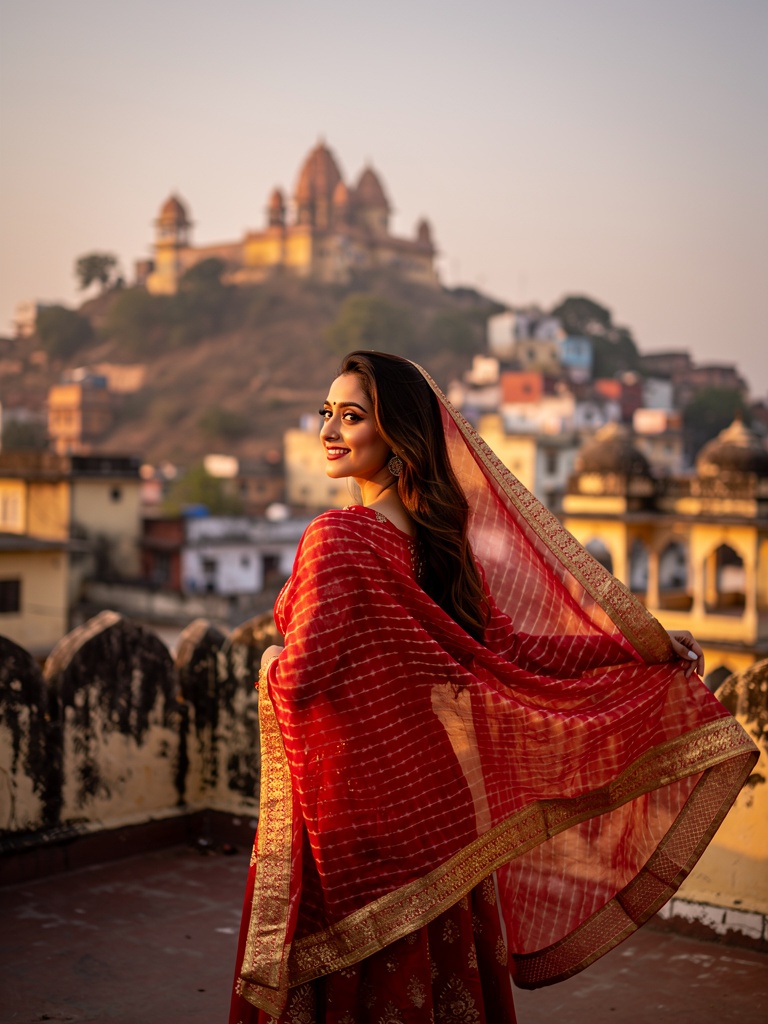
Radha Rani’s village, normally
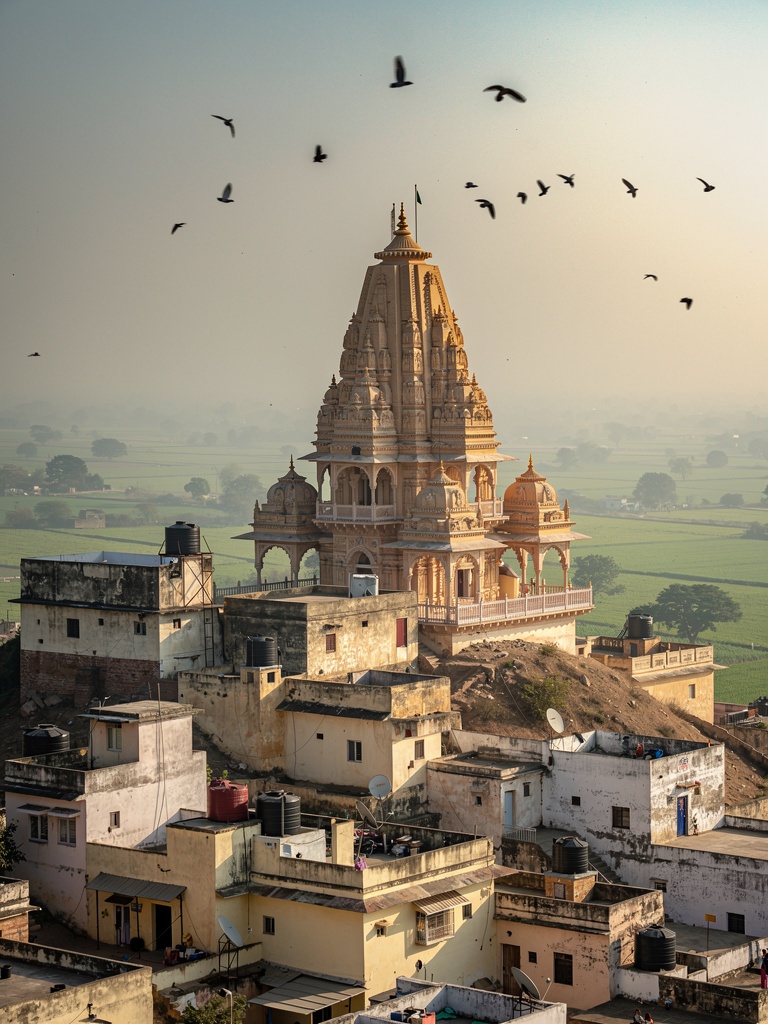
Barsana (45–50 km from Mathura, ~1–1.5 hrs) sits on a low ridge of the Braj hills. Its main shrine, the Radha Rani temple, climbs the summit in layered Rajasthani-style arches — the best hilltop temple of the circuit. Off-season it is calm, village-paced and genuinely moving: few tourists, schoolchildren saying Radhe Radhe, goats on the lanes. The climb from the parking lot to the temple is steep and step-heavy; carry water and take it slowly.
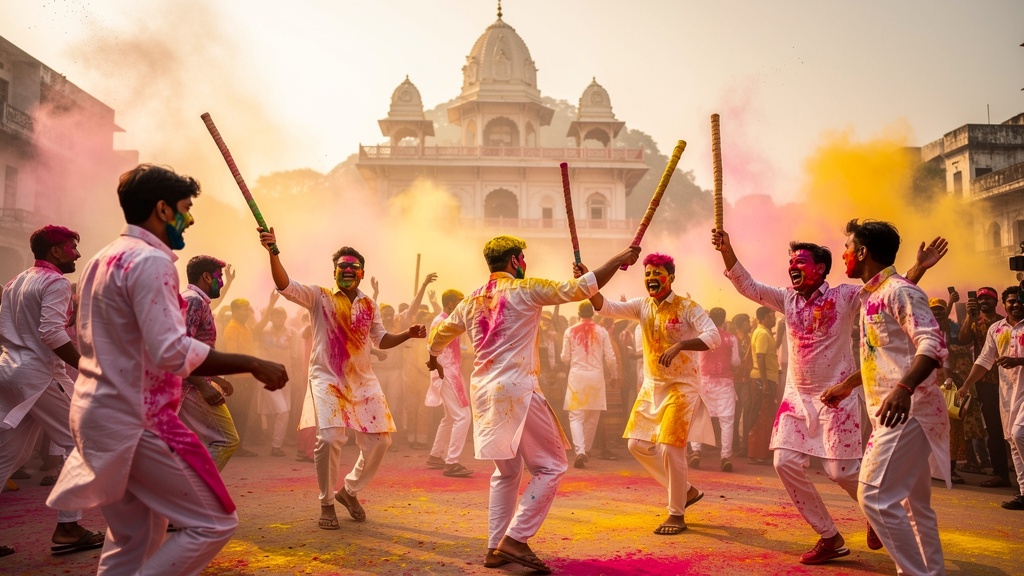
Lathmar Holi — what actually happens
In the lunar calendar, Barsana’s Holi arrives ~a week before the main festival. Men from Nandgaon (Krishna’s village) walk to Barsana dressed as cowherds; the women of Barsana (Radha’s side) greet them with sticks — lathis — and playful blows, colour, songs and water. The duel is staged and good-humoured, but the lathis are real and the crowd is enormous.
- Dates (lunar): 2026’s Holi cycle peaked early in March; for 2027 expect Lathmar ~1–2 March and main Holi ~4–5 March. Confirm before booking — it shifts yearly.
- Showtime: the central square action peaks roughly 8 am–1 pm; be in the village by 7–7:30 am or the approach roads choke.
- It is filmed everywhere: expect camera crews and every phone in India; the atmosphere is festive, not hostile.
Survive the loud one — the practical list
- Wear the worst clothes you own. Gouache-grade colour will permanently stain everything, including your passport if it is in a cloth pouch.
- Waterproof phone/camera pouch, sealed. Water balloons and powdered colour get everywhere.
- Eye protection: cheap swim goggles or sunglasses; powder in eyes is the classic accident.
- Oil before colour: coconut/sesame oil on skin and hair makes the powder wash out far more easily.
- Carry cash small: overpriced food/water on the hill; ATMs are far away in town.
- Stay out of the lathi zone: the mock-battle centre is not for bystander photography. Enjoy from the viewpoint sides — police will direct you.
- Crowd crush: the temple-hill steps get dangerously packed; follow officer instructions, move early if it feels tight.
- Leave nothing in the car: parking areas near the village are opportunistic-theft hotspots on festival days.
Pair with Nandgaon
The next day, Holi moves to Nandgaon (Nanda’s village, ~15 min away) where the roles reverse — and the smaller, more village-feeling celebration is many travellers’ favourite. See the Nandgaon guide and the festival calendar.