The essentials to eat
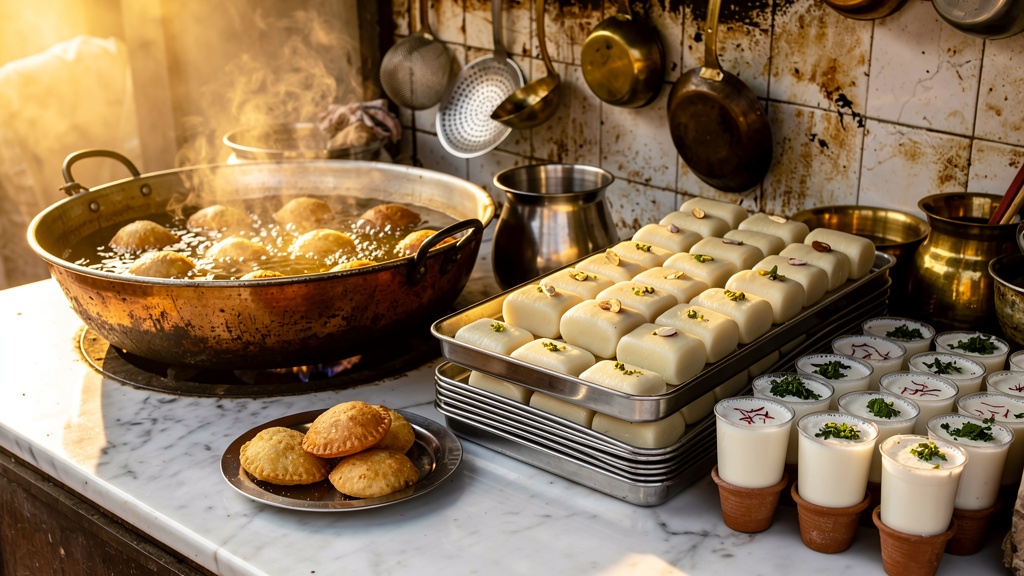
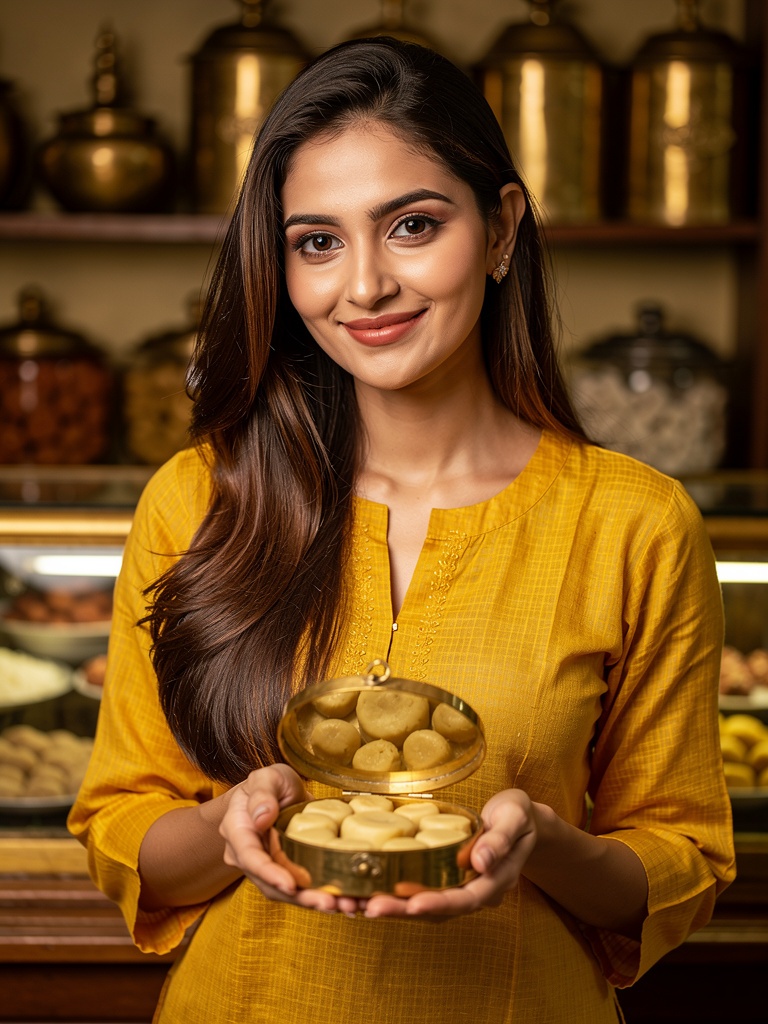
- Peda: Mathura’s signature sweet — dense, milky, faintly cardamom. Buy fresh from a busy shop (a queue is a good sign), not a sealed tourist box. It keeps for days and travels well.
- Kachori-sabzi: the classic Braj breakfast — crisp kachori with a spicy potato curry, eaten with a spoon and a smile. Best from a morning stall, 7–10 am.
- Lassi: thick, sweet, served in a clay kulhad. The ghat-side and old-city versions are the real ones.
- Rabri: slow-reduced milk with saffron — a richer cousin of the peda, best in the evening.
- Prasadam: at ISKCON (rolls, thalis) and every temple’s distribution point — eat it fresh, carry the wrappers out.
Where to eat
There are no "must-visit named restaurants" worth crossing town for — the honest guide is the pattern: old-city lanes near Dwarkadhish and the ghats for breakfast and sweets, ISKCON’s restaurant for a clean reliable lunch, and the peda shops of the Janmabhoomi road for takeaway. Eat where locals queue; skip the laminated-menu places aimed at tour buses.
What to buy
- Brass & bell-metal: diyas, bells, thalis, little Radha–Krishna murtis. The civil-lines market in Mathura is cheaper than Vrindavan’s Parikrama Marg; compare before buying.
- Poshak: the tiny silk outfits for deity dolls — a uniquely Braj souvenir, sold by the metre in the bazaars.
- Kurtas & dupattas: the "Radhe Radhe" kurta is the pilgrim uniform; cotton ones are honest value, silk ones are not.
- Wooden toys & peacock motifs: the peacock is Braj’s bird; painted wooden peacocks make lovely, light gifts.
Pricing honesty
- Tourist-adjacent shops routinely quote 2–3× for brass and silk. A calm "that’s too much" and a walk-away usually halves it.
- Weights matter: check the peda box weight and the brass piece weight before paying.
- UPI is accepted almost everywhere in town; carry small cash for stalls and dharamshala counters.
- No fixed-price rule in the bazaars — haggling is normal, respectful and expected.
Ethical shopping note
Buy from shops that label their brass honestly; avoid "antique" claims (real antiques are illegal to export and the "genuine ones" are fakes). Wooden and cloth crafts support local artisans — those are the purchases that help Braj.
Where to stay near all of this → · When to shop in the 2-day plan →