The legend, briefly
In the Bhagavata Purana, when the cowherds of Vrindavan prepared offerings for Indra, Krishna persuaded them to worship Govardhan hill instead — the land that actually fed them. Indra retaliated with a week of storms; Krishna lifted the hill on one finger and held it like an umbrella over the village, people and cattle. The hill has been the sacred centre of Braj’s landscape ever since, and circling it is a pilgrimage in itself.
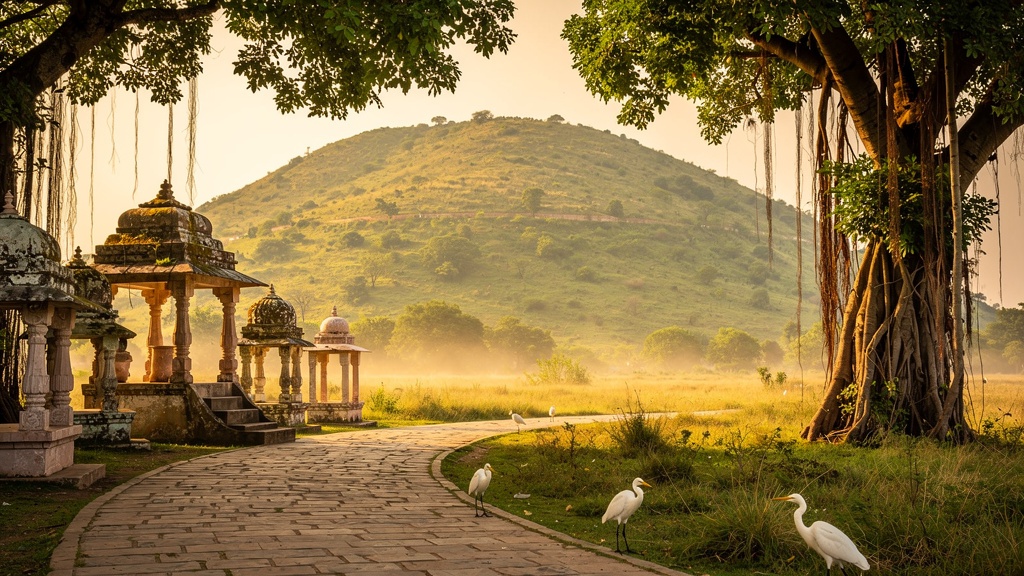
The route in outline (~21 km)
The traditional parikrama starts from Jatipura (the town at Govardhan’s foot) and proceeds clockwise around the hill, hugging its base for most of the way. The surface is mixed: metalled road, gravel track and temple-lined village lanes. Key named halts (timings for a vehicle pace):
| Stop | Why it matters |
|---|---|
| Jatipura start | Mukharvind temple & the Annakut (Govardhan Puja) site at the north-west approach. |
| Kusum Sarovar | The sandstone-pavilioned tank at the hill’s edge — sunrise here is the parikrama’s signature photo. |
| Mansi Ganga | A man-made tank said to be filled by the Ganges herself; ritual bathing point. |
| Radha Kund & Shyam Kund | The twin sacred kunds of the Radha–Krishna pastimes — the most revered water in Braj. |
| Dan Ghati | Where offerings for the parikrama are given; a busy, colourful stopping point. |
| Punchari & the hill-circuit lanes | Village shrines, banyan shade, and the living farmland the whole circuit runs through. |
On foot vs by vehicle
- On foot (~4–6 hours, 15–20 km actual walking): start at 5:00–5:30 am from Jatipura; carry water, wear proper shoes, and use the shoe-stands at temples. It is flat, shady in parts, and deeply rewarding — best Oct–Mar. Not advised in summer heat or monsoon mud.
- By vehicle (tempo/car, ~2–3 hours): drivers run the circuit continuously; you hop off, take darshan, hop back on. Families, seniors and the time-strapped choose this. Agree the full-loop price before starting and confirm it includes the waiting.
- Mixed: vehicle for the long dry stretches, walking the last kilometre into each main temple — the best compromise for most visitors.
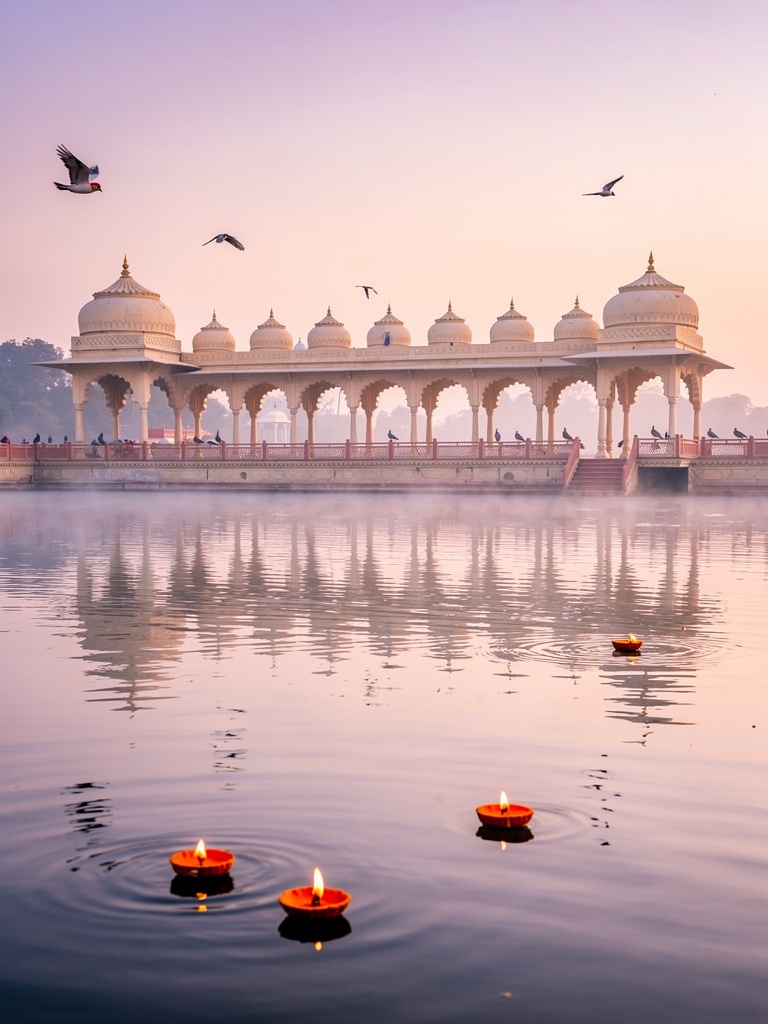
Radha Kund detour
Two short kilometres off the main hill circuit, Radha Kund (and adjacent Shyam Kund) are where Radha and Krishna are said to have bathed. The atmosphere is entirely different from Vrindavan’s bazaar: silent, austere, intensely sacred. Bathing is ritual, not recreation — the water is holy and protected; do not swim. Photography is discouraged by general practice.
Practical logistics
- Getting there: Govardhan is ~23 km from Mathura and ~25 km from Vrindavan (45–60 min). Shared tempos from Mathura’s old bus stand; private autos for groups.
- Stay: dharamshalas at Jatipura and simple hotels in Govardhan town — basic, honest, fine for the night before a dawn start.
- Govardhan Puja (Nov) & Kartik: the parikrama swells to tens of thousands; vehicles are restricted near the main temples; go early, walk.
- Sun protection & water: the circuit is open farmland; a hat and 1.5–2 L per person are non-negotiable in daylight hours.
- Dress: temple-standard modest; the parikrama is a working religious landscape — covered knees matter at the kunds.
Pair the parikrama with the full day: 3-day circuit with Govardhan →