Nidhivan — the grove of the night raas
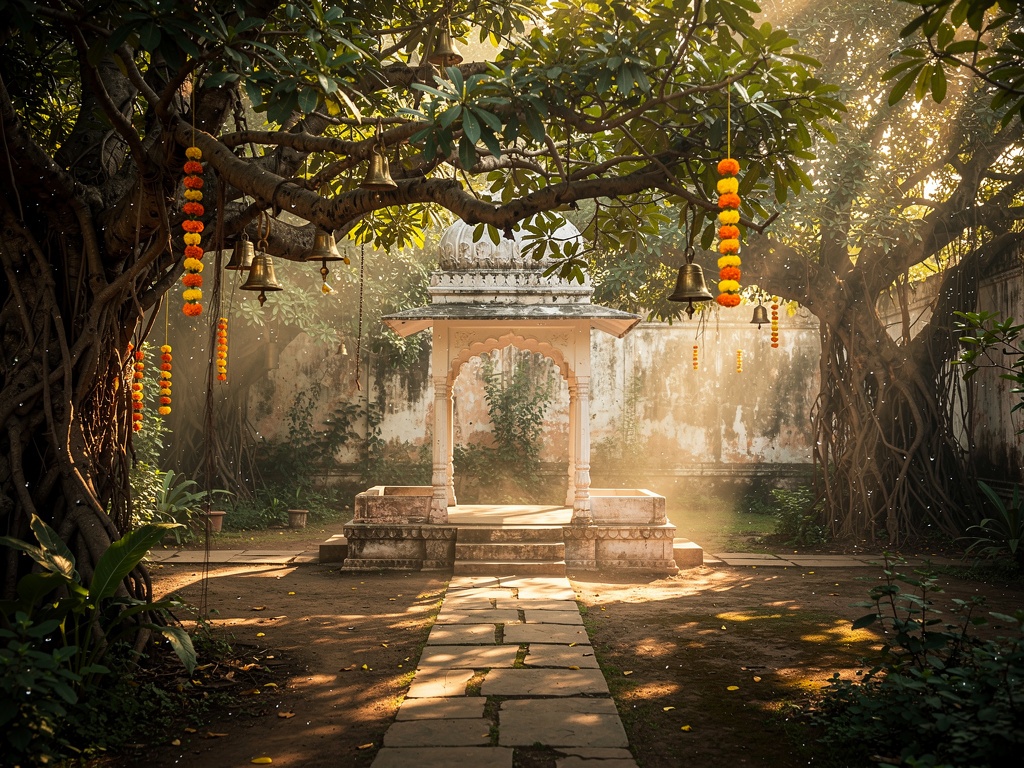
The most mysterious place in Vrindavan: a walled garden of ancient, intertwined tulsi and tamarind trees, where tradition says Krishna returns each night to dance the raas with Radha and the gopis. Nothing larger than a bird lives here after dark, they say — no one stays to test it. By day it is a peaceful tangle of shade, bells and small shrines; darshan is via the single walkway, shoes off, voices low. The experience is quietly spine-tingling no matter what you believe.
Seva Kunj — the garden of service
Across from Nidhivan: a similarly walled, flower-rich garden where Krishna is said to have rested after the raas, and where Rupa and Jiva Goswami — Vrindavan’s founding theologians — meditated. The tulsi groves are pruned into archways; the atmosphere is devotional, highly photogenic, and (unlike Banke Bihari) camera-friendly.
The Goswami temples — the original Vrindavan
In the 16th century, the six Goswamis of Vrindavan, disciples of Chaitanya, built the shrines that made this town the capital of a new devotional movement. They remain among the most authentic experiences in Braj:
- Radha Ramana (1542): said to have a self-manifested deity; intimate, quiet, museum-like devotion.
- Radha Gopinath: one of the richest and most beautifully maintained old shrines.
- Radha Damodar: the smallest and most austere — Jiva Goswami’s seat, where Bhaktivedanta Swami Prabhupada himself lived before leaving for the West.
- Radha Vallabh: distinctive for its focus on Radha alone, with a famous seasonal swing festival.
None of these are on the tourist-bus circuit; all reward the patient with the real devotional temperature of Vrindavan.
Ghats of Vrindavan
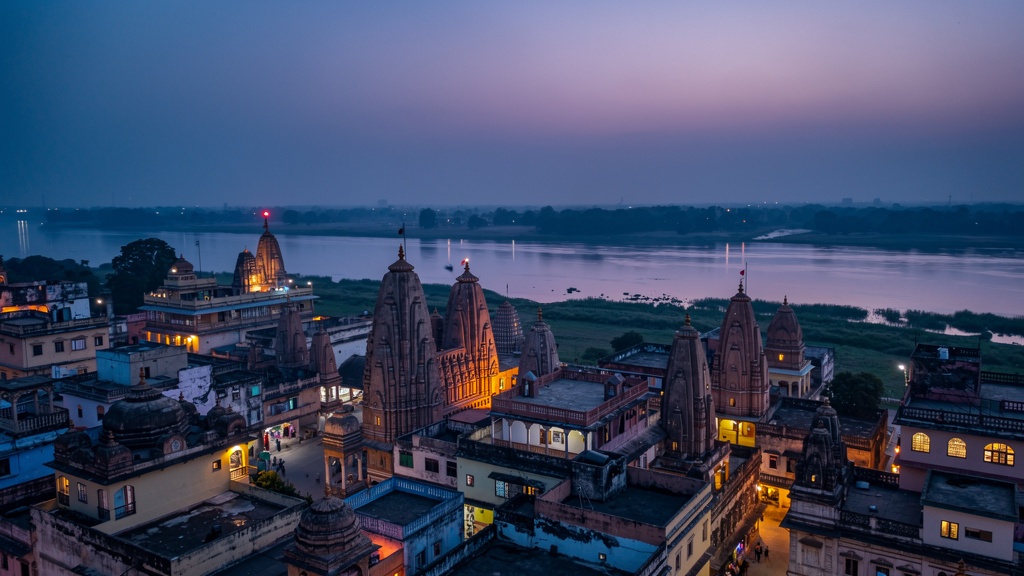
The Yamuna here is cleaner in appearance than downstream at Mathura but still unsafe for immersion. The Keshi Ghat and Calcutta Ghat give the classic riverside views; Kartik evenings put thousands of lamps along them.
Bazaar notes
Parikrama Marg’s lanes are the shopping heart: silk poshak sets for deity dolls, brass diyas and bells, and the "Radhe Radhe" kurta that marks you as a sensible pilgrim. Prices are inflated for tourists by default — compare three shops before committing, and know that the same brass is cheaper in Mathura’s civil-lines market.