Why everyone comes here
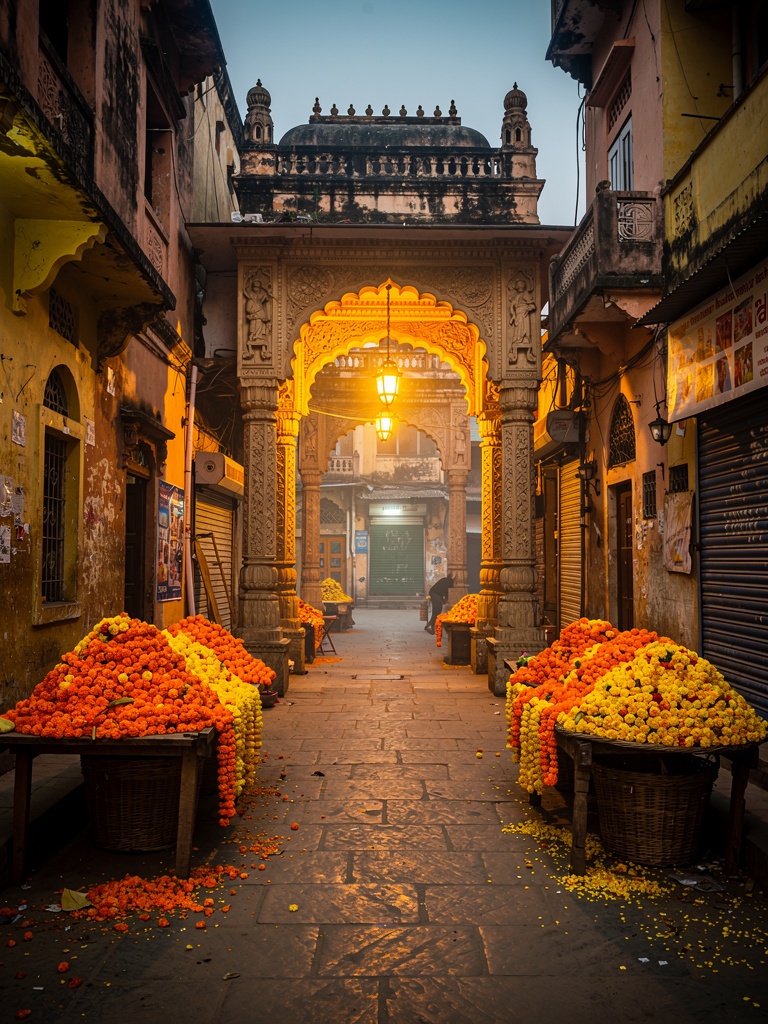
Built in 1864 by Swami Haridas’s lineage tradition, Banke Bihari ("he who bends twice") is one of the most intensely loved Krishna shrines in North India. It is not grand like Prem Mandir — it is old, dark, intimate and packed. The deity faces devotees directly (unlike most temples where the murti faces the sanctum), and darshan happens in the historic jhanki style: the curtain parts, devotees glimpse the black-marble figure, the curtain closes. Swaying, singing, the famous "kaise ho?" staging — every moment is choreographed ritual.
Timings — and the midday closure
| Window | Detail |
|---|---|
| Morning | ~7:45–8:00 am to ~12:00 noon. Mangala aarti around 7:45; the quietest darshan is right at opening. |
| Afternoon | Closed ~12:00 – 5:30 pm for the deity’s rest. Do not plan Banke Bihari at 2 pm — it will be shut. |
| Evening | ~5:30–6:00 pm to ~8:30 pm. Shringar darshan in the evening is the most crowded and the most beautiful. |
Dates & hours move. On Ekadashi, Janmashtami and Holi the schedule changes — check the temple’s current notices (the gate boards) or ask your hotel the evening before.
The phones-and-cameras ban — take it seriously
Banke Bihari is the strictest photography zone in Braj: no mobile phones, no cameras, no smartwatches with cameras. Counters and lockers at the gates take your devices (small fee). Guards check; filming gets you escorted out and it diminishes everyone’s experience. Going without a phone for forty minutes is, frankly, part of the point — look with your eyes.
Queue & darshan reality
- Normal day: 20–45 minutes; brisk, orderly, with several curtain-openings.
- Weekend / Ekadashi / festival: 1–3 hours queueing — at Janmashtami and Phoolon-wali-Holi, several hours plus body-to-body density. Not suitable for infants on the busiest days.
- Darshan itself is seconds long per curtain-opening. The emotion is in the collective moment; manage expectations and you will not be disappointed.
Etiquette that locals appreciate
- Leave prostration/offerings to the queue system; do not push forward at curtain time.
- Keep hands folded or at rest — no selfies, no recording (see ban above).
- Dress modestly; footwear at shoe counters outside.
- Proceed in the queue direction; the shrine manages flow tightly, don't fight it.
Around the temple
- Food: kachori-sabzi and lassi stalls crowd the bazaar lanes; the peda shops across the road are tourist staples.
- Nearby shrines: Nidhivan and Seva Kunj are a short walk and deeply atmospheric — pair them with the same morning.
- Stay: hotels on the Parikrama Marg side put you 5–10 min from the gate; see where to stay.