The story on the ground
In the Bhagavata narrative, the infant Krishna is carried across the flooded Yamuna to Gokul, the cowherd settlement of his foster-father Nanda. Gokul and its neighbour Raman Reti are where the tales of the child Krishna — the butter thief, the calf-herder, the one who ate mud and showed the universe in his mouth — all take place.

Raman Reti — the sand
The word reti means sand, and this is sand unlike any you will see elsewhere: pale gold, impossibly fine, miniature dunes that the wind re-sculpts daily. Devotees say Krishna played here in his child-form, and pilgrims still take pinches of it home. Walk it barefoot at sunrise, sit in the silence, and it becomes one of the most memorable half-hours of the whole circuit.
Nanda Bhavan & the shrines
- Nanda Bhavan: the main Gokul temple, marking Nanda’s home — beautifully kept, with morning and evening darshan like all Braj shrines.
- Chhatikara (the butter-churning house): the spot of the famous butter-stealing lila.
- The Udho-ji and Madan Mohan shrines: quieter corners of the same complex, loved by repeat pilgrims.
The ghats
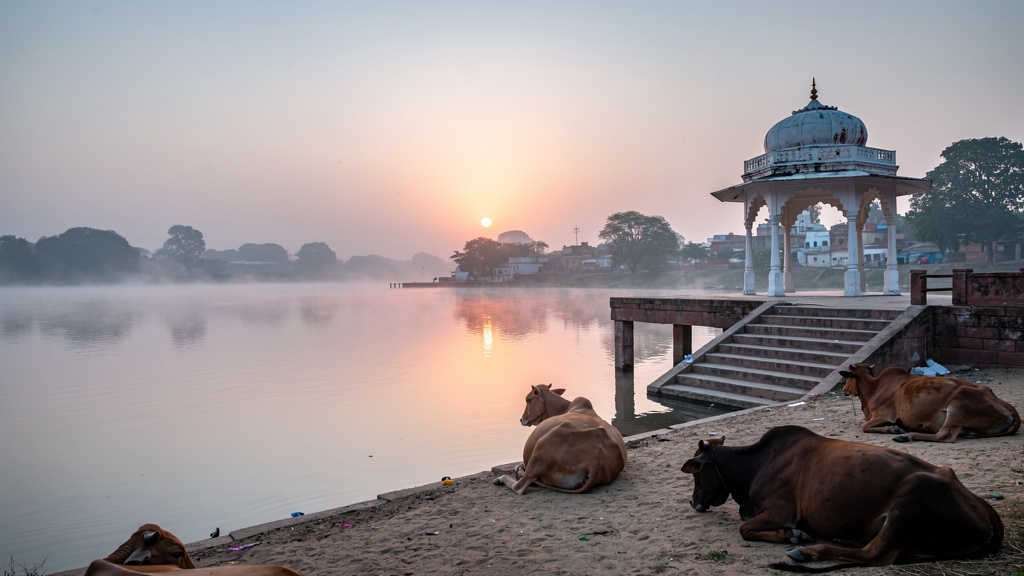
Gokul’s riverside is gentle and agricultural — boats, mud, cows, and a ghat at peace in a way Mathura’s never is. The water remains unfit for bathing (industrial and municipal load upstream); enjoy the view, not the swim. In the monsoon the river here rises fast and the low ghats flood — check locally after heavy rain.
Visiting in one morning
- Timing: set out 6:00–6:30 am from Mathura; back by 10:30–11 — well before the midday temple closure.
- Getting there: ~15 km (30 min). Shared tempos from Mathura bus stand; the last section is village lanes — a private auto/taxi is much smoother with kids.
- Opening hours: shrines follow the standard Braj pattern (morning until ~11:30–12, reopen ~4–5 pm).
- Food: simple village kachori-lassi stops; no fine dining. Carry water.
Next village over: Nandgaon → · Or the Govardhan parikrama →