Why this museum matters
Most visitors come to Mathura for Krishna. But historically, the city’s global fame belongs to its sculptors. Between the 1st and 6th centuries CE — under the Kushans and Guptas — Mathura was one of the three great image-making centres of India, and by many accounts the most original. Its artists worked the local mottled red sandstone into everything: yakshas, queens, ascetics, Jains, Buddhas, and the Hindu gods, side by side in one astonishing workshop tradition.
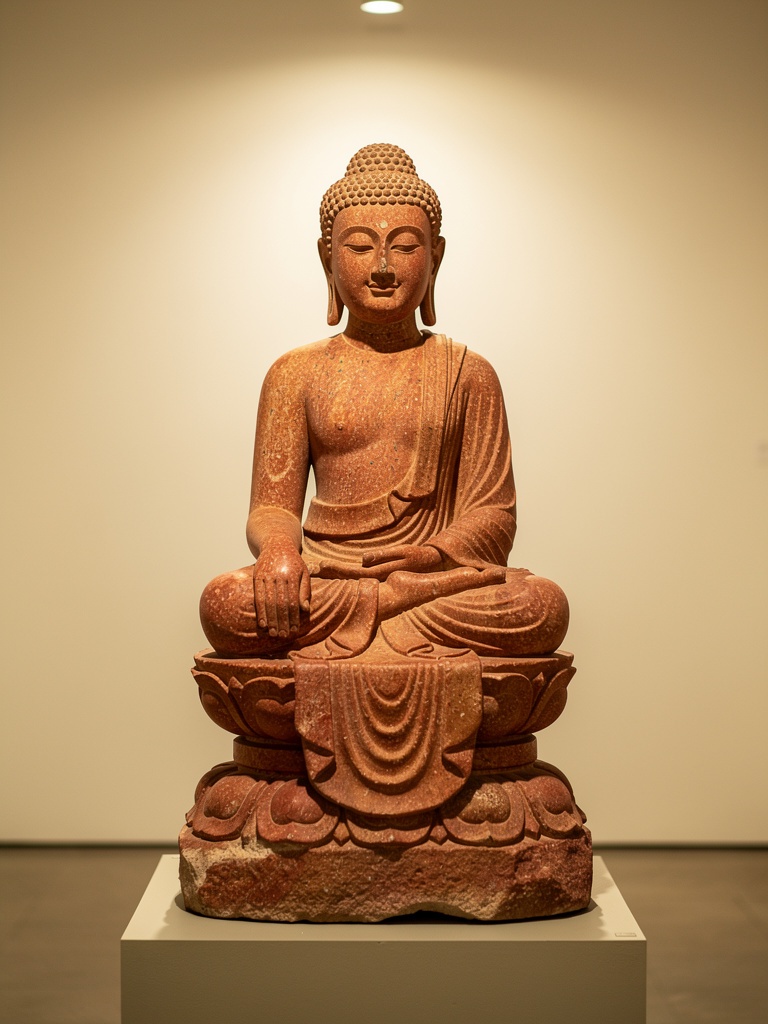
They are also credited with creating the first anthropomorphic images of the Buddha in India — fleshy, joyful, earthily human figures that stand in complete contrast to the Greco-Roman Buddhas of Gandhara. If you see the famous "Kapardin" Buddha (hair in a bun, right hand raised in reassurance) at any museum in the world, it is almost certainly the Mathura type.
What you will see
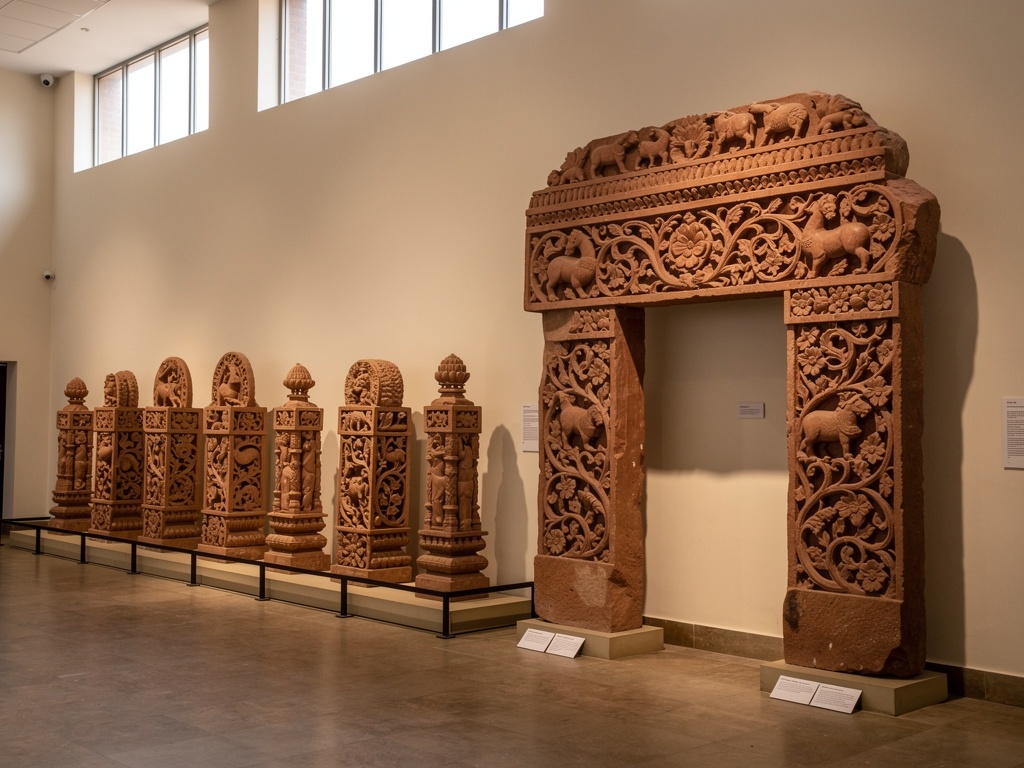
- The sculpture galleries: the Kushan masterpieces — the large yakshis with their sensuous carvings, the railing pillars from the ancient stupa sites, the garden-scene reliefs of tree spirits and music.
- The Buddha hall: the seated and standing Buddhas of the Mathura type, including the famous Kapardin image.
- Jain & Brahmanical panels: the same workshops served every faith, and the museum shows that pluralism beautifully.
- Coins, terracottas & inscriptions: from the city Kushans traded through; quick, absorbing, and often ignored.
Visiting practicalities
| Detail | Info |
|---|---|
| Hours | Typically 10:30 am – 4:30 pm; closed Mondays and public holidays. Verify closer to your date. |
| Entry | Nominal ticket; foreign visitors’ rate higher. Photography of most objects allowed; flash off. |
| Location | Dampier Park, civil lines — 10–15 min by auto/e-rickshaw from Janmabhoomi or MTJ station. |
| Best slot | 12–3 pm — exactly when the temples close. This is the museum’s superpower. |
Back to the Braj overview → · Where the museum fits in the 2-day plan →