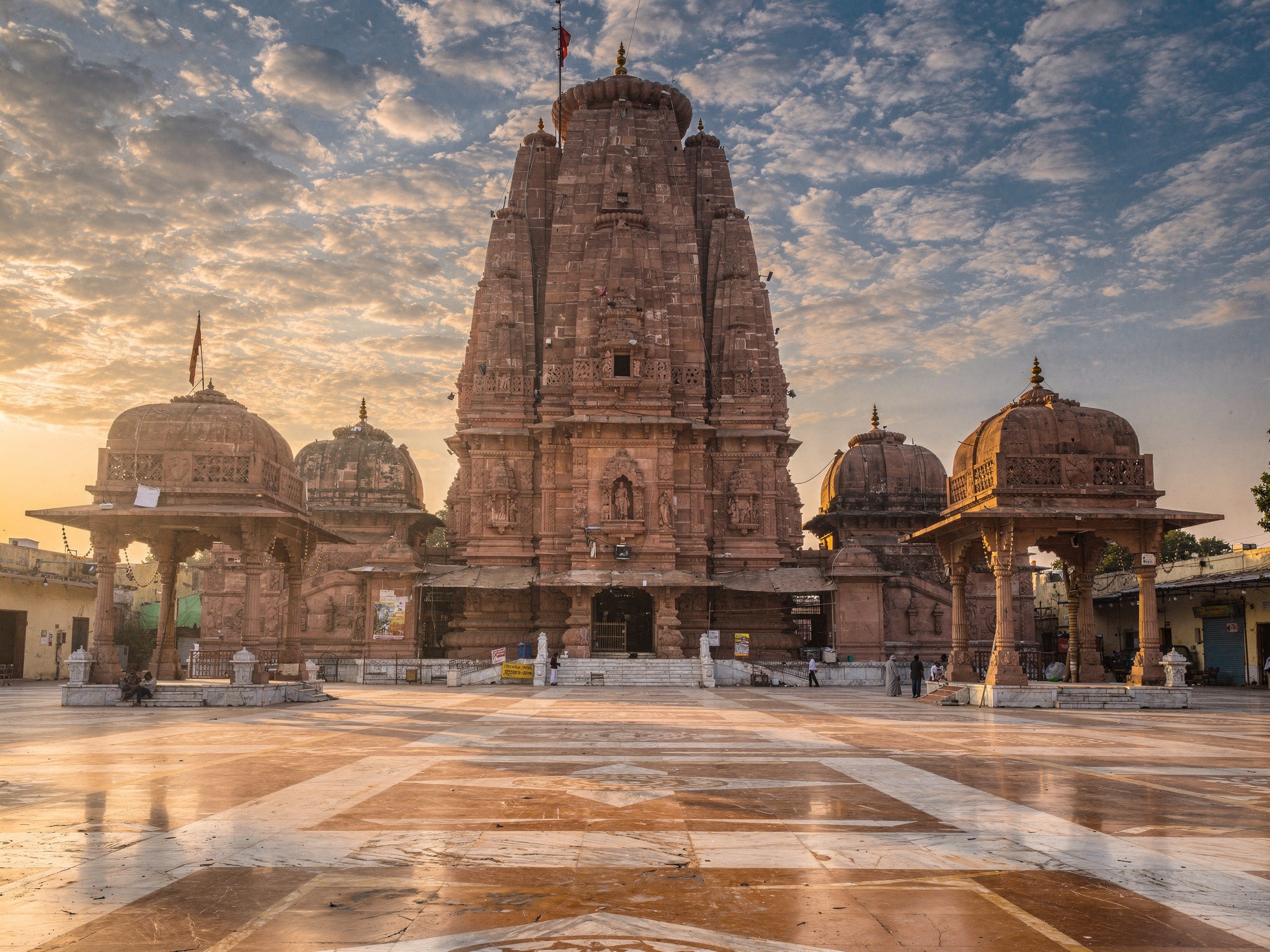
What this place is
Janmabhoomi ("birth land") marks the site — inside the Katra enclosure, near the Yamuna in the old city — where tradition places the prison cell of Kamsa and the birth of Krishna. The Keshav Dev temple complex here is the largest Krishna temple in Mathura and the emotional high point of most pilgrim trips. It is managed by a trust, guarded like a sensitive site (it is), and heavily developed.
The archaeology is separate: excavations have exposed masonry layers going back centuries, and temple records tell of older structures destroyed and rebuilt. As with many living shrines, what you see is devotion layered on history — the museum in town is where the detached, scholarly version lives. Both views are valid; keep them apart.
Darshan timing & the daily rhythm
| Window | Detail |
|---|---|
| Morning | ~5:00 am – 12:00 pm. Earliest darshan sees the shortest queues; by 9–10 am lines grow. |
| Afternoon | Temple closes for pranala/seva — use the hours for the museum, Gita Mandir or lunch. |
| Evening | ~4:00/5:00 pm – 9:00 pm. Aarti hours are atmospheric but busier; expect lamps, bells and incense. |
Verify before you go. Timings shift slightly with seasons and festivals — the district portal (mathura.nic.in) and the shrine trust publish the current schedule. On Janmashtami the complex runs through the night.
Queue reality — this is the big one
- Normal weekday: 15–45 minutes, moving steadily.
- Weekend / Ekadashi / Krishnajanmashtami season: 1–3 hours. Come at opening (0500–0600) or accept the line.
- Janmashtami night: hours-long queues past midnight; the whole old city becomes a pedestrian zone.
Photography, phones & bags
Cameras and mobile phones are not allowed inside the main temple. There are locker facilities / bag counters at the entrance; guards enforce this firmly. The Garbh Griha (sanctum) — the most emotional spot — is strictly no-photo. Follow this; it is both a rule and a courtesy, and sneaking shots gets people escorted out.
Rules that actually get enforced
- Footwear outside the complex; carry it or use the shoe counter.
- Modest dress (covered shoulders, below knee) works best; dupatta/scarf useful.
- Airport-style security at the gate — expect queues for the queue. ID helps.
- Bags, phones, cameras, umbrellas: lockers at the gate.
- Unofficial "guides" offering "special darshan fast-track" — politely decline; there is no such thing from randoms.
Plan Janmabhoomi for your first morning. The line builds through the day, and the shrines inside deserve unhurried calm — you get that only at opening time.
Nearby in the old city
- Dwarkadhish Temple — 10–15 min walk through the lanes; combine in the same morning loop.
- Vishram Ghat (Yamuna) — the aarti here at dusk is the evening ritual to end the day.
- Gita Mandir — a short rickshaw ride; marble Bhagavad Gita panels, calm and photogenic.
- Government Museum Mathura — the 12–4 pm closure window is the perfect slot.